
Strength Before Shine
Your skin is like a house. The outside looks beautiful when the frame underneath is strong.
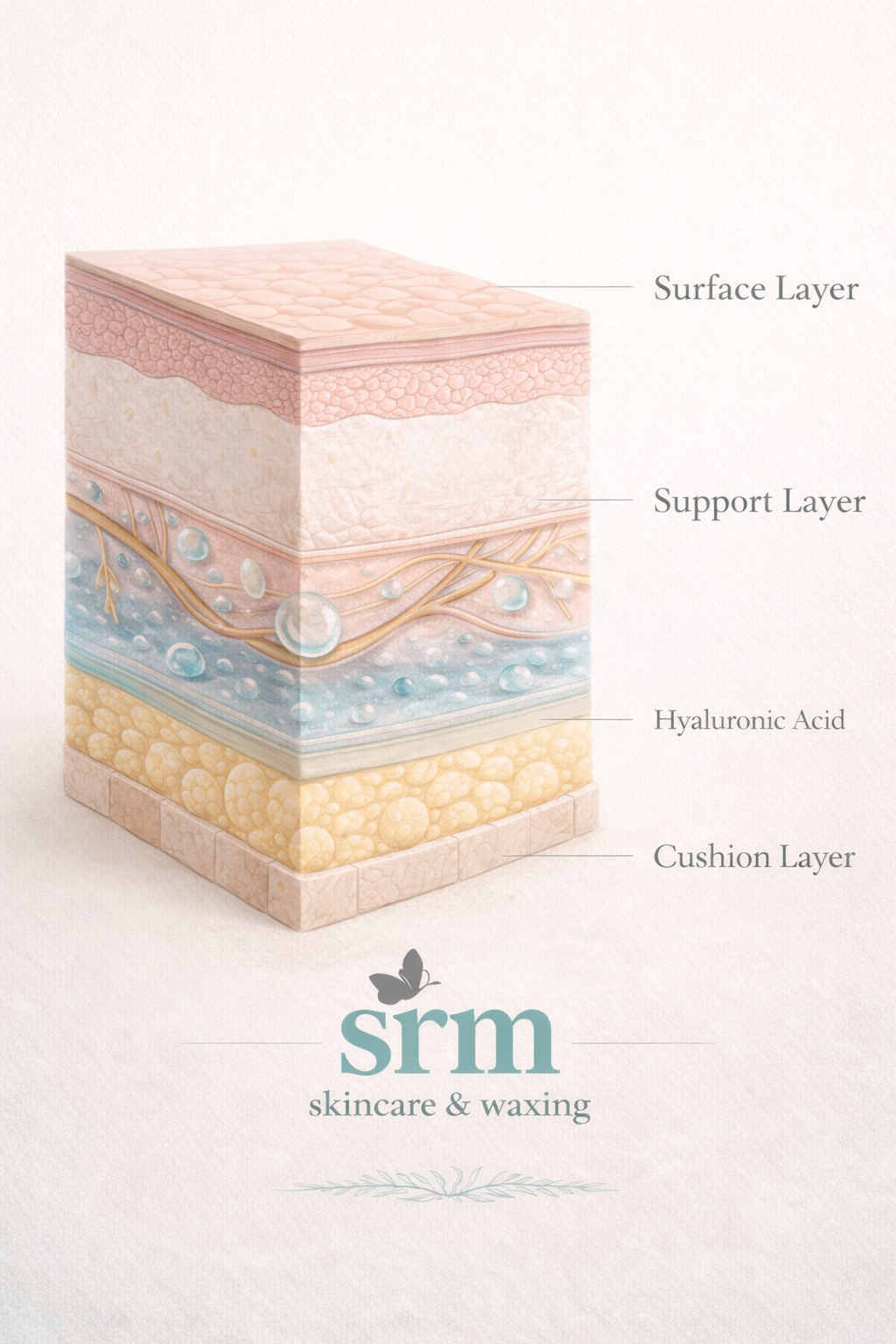
Layers Of The Skin
The very top layer — the stratum corneum — is thin, but powerful. It protects you. It keeps moisture in. It keeps irritants out.
And it’s actually my favorite layer. Because when the layers underneath are healthy, you can see it on the surface.
Smoother.
More even.
More resilient.
That’s when I know the foundation is strong.
The Sun and the Truth About Tanning
Here’s something important:
A tan is a scar.
It’s not a sign of health. It’s your skin reacting to injury.
There are two main types of UV light:
UVA (A for aging)
UVB (B for burning)
UVB burns you. UVA ages you.
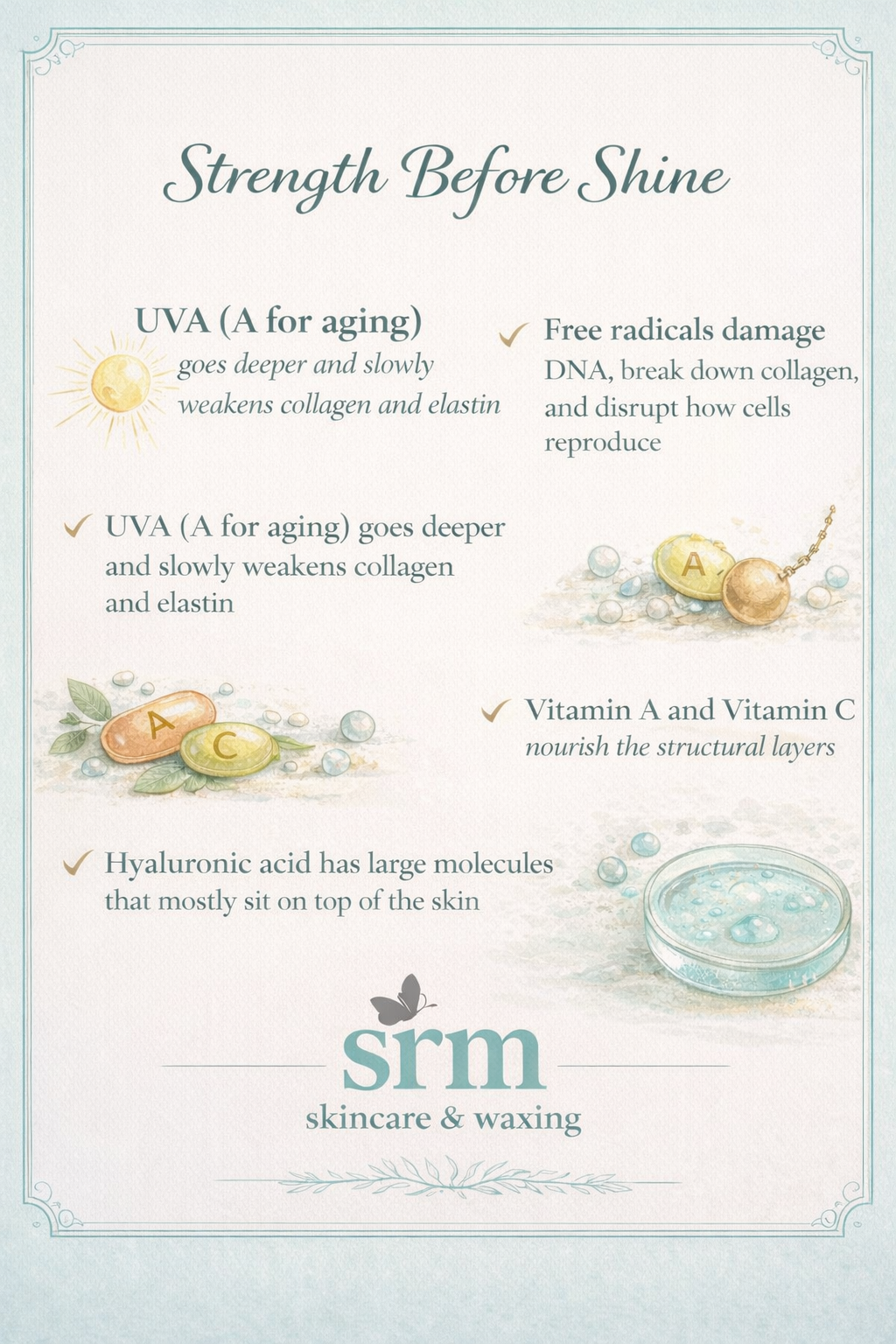
UVA goes deeper into the dermis and slowly weakens collagen and elastin — the support beams of your skin. It’s present year-round and even comes through windows.
That’s why I recommend SPF every single day, every season — inside or outside. Protection isn’t seasonal. It’s structural.
What Free Radicals Really Do
When UV light hits your skin, it creates free radicals. Think of them like tiny wrecking balls.
They:
• Damage DNA
• Weaken cell membranes
• Break down collagen
• Fracture elastin
• Disrupt how cells reproduce
That’s not dryness. That’s a structural breakdown. Over time, the architecture weakens.
Structural Change In The Skin
Vitamin A + C = Strong Structure
Collagen doesn’t build itself. It needs two key nutrients:
Vitamin A and Vitamin C.
Vitamin A tells your skin cells how to behave properly.
Vitamin C helps build and stabilize collagen.
Without them, structure becomes fragile. With them, skin functions the way it was designed to.
Why Hydration Isn’t Always Structural
Hyaluronic acid is often called a hydrator. And it is, but it’s more than that. It acts like a cushion inside the skin, holding water and supporting volume. But here’s what most people don’t realize:
Hyaluronic acid molecules are large.
When applied to intact skin, they mostly sit on the surface. They don’t easily travel into deeper layers where structural hydration happens.
To deliver hyaluronic acid deeper into the skin, the barrier must be temporarily and safely navigated.
This can be done by:
• Creating microscopic channels through the outer layer so larger molecules can pass through (microchanneling)
When the barrier is opened intelligently, larger molecules can reach deeper tissues.
And when Vitamin A levels are adequate, the receptors that stimulate internal hyaluronic acid production function more effectively, too.
That’s when hydration becomes structural — not just surface-level moisture.
Healthy skin is not about chasing hydration.
It’s about protecting the barrier.
Supporting collagen.
Managing UV exposure.
Strengthening communication.
When the structure is strong, the hydration is natural.
And that’s the kind of skin health that lasts.
— Sabrina
SRM Skincare & Waxing Studio